

DEGREE GUIDE
Illustration
What do Illustration degrees involve?
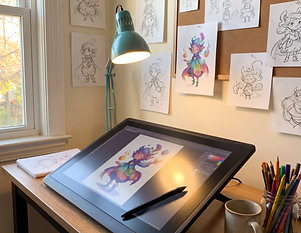
Illustration degrees teach you how to communicate ideas and stories through visual imagery, combining traditional and digital techniques. You will explore key areas such as drawing, digital illustration, printmaking, animation, and narrative storytelling. These courses help you develop your personal style while refining technical skills and learning how illustration is used in publishing, advertising, concept art, and branding. You will also explore visual communication, composition, and industry trends. Many degrees offer portfolio development, live projects, and industry collaborations, preparing you for careers in editorial illustration, graphic novels, animation, and creative design.
Example
Modules

Visual Narratives: Learn how to tell stories through images, using composition, pacing and symbolism to create compelling visual sequences across formats.
Digital Illustration Techniques: Build confidence using industry-standard tools like Photoshop and Procreate to produce artwork for books, games and online media.
Professional Practice in Illustration: Explore how illustrators work in the real world—developing a portfolio, pricing work and managing freelance commissions.
Common Degree Names
💼 Placement opportunities are available at many universities, especially in publishing, design studios or creative agencies.
🌍 Study abroad is offered at several institutions.
BA (Hons) Illustration
BA (Hons) Illustration and Animation
BA (Hons) Illustration and Graphic Design
BA (Hons) Illustration with Creative Writing
BA (Hons) Illustration and Visual Communication
Level 3 (A-level / IB Diploma (HL) / Scottish Highers)
Illustration combines drawing skills with storytelling and visual communication. Your portfolio is the most important part of your application: universities want to see your drawing ability, creative thinking, and personal style. Art-related subjects help you prepare, but it's the quality of your work that matters most.
Subjects that strengthen your application:
Art or Art & Design – usually expected or strongly preferred
Graphics or Photography – excellent preparation for visual communication
English Literature or Creative Writing – helpful for narrative and editorial illustration
Media Studies – useful for understanding audiences and visual storytelling
✨ A Foundation Diploma in Art & Design is the traditional route into competitive illustration courses, and is recommended if you haven't studied a creative subject at Level 3. Your portfolio is the most important part of your application – see Other Requirements for portfolio guidance.
Universities may also accept:
BTEC Extended Diplomas in Art and Design or Art and Design Practice
BTEC National Extended Certificates or National Diplomas alongside relevant A-Level subjects
UAL Level 3 Diplomas in Art & Design or Illustration
T-levels in Craft and Design
IB Career-related Programme (IBCP) with a Visual Arts subject at Higher Level among your IB subjects (minimum two, ideally three - see relevant subjects above) alongside your Career-Related Study; an Art & Design pathway would be directly relevant
Requirements vary between courses. Always check specific course requirements.
Level 2 Qualifications (GCSE / MYP / National 5)
Most courses ask for:
GCSE English Language and Maths at grade 4/C or above, or equivalent such as National 5s or MYP
📘 GCSE (or equivalent) Art, Graphics, or Photography can be helpful but they are not essential.
Is this degree right for you?
Members can explore whether this degree fits who they are:
-
Skills you'd develop and whether they match your strengths
-
How this aligns with your interests, motivators and values
-
Career paths and where graduates end up
Full access to all self-discovery tools and guides. Cancel anytime.
Skills you would develop in X degree

Skill Name
Context sentence
Heading 6
I'm a paragraph. Click here to add your own text and edit me. It's easy.
Heading 6
I'm a paragraph. Click here to add your own text and edit me. It's easy.
custom skills note goes here
Is this a good fit for you?
Use the tabs to explore the kind of person that this would be a good fit for. Do you share the Interests, Motivations, Values, Work identity and skills that people who thrive in this course tend to have?
Not sure what these things are? Explore your Identity Tree with us first.
Interests that connect well with an Illustration degree
Students who enjoy this degree often share these interests. You don't need to feel strongly about all of them, and interests develop over time. If one or two catch your curiosity, or sound like something you'd like to know more about, that's a good sign.


Visual Art, Craft & Design: The degree is centred on creating images. You'll develop your drawing, digital illustration, and printmaking skills, experimenting with traditional and digital techniques to build a distinctive personal style and a professional portfolio.
Language, Stories & Writing: Visual storytelling runs through the degree. You'll learn how to tell stories through images, using composition, pacing, and symbolism to create compelling visual sequences for picture books, comics, editorial work, and digital platforms.

Careers an Illustration degree could lead you to