
DEGREE GUIDE
Landscape Design
What do Landscape Design degrees involve?
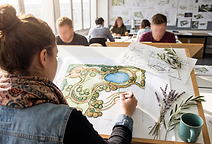
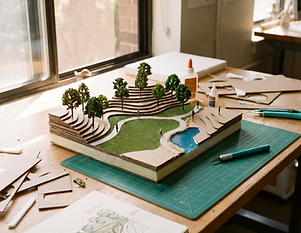
Landscape Design degrees teach you how to plan and create outdoor spaces that are functional, sustainable, and visually striking. You will explore key areas such as urban planning, ecology, planting design, landscape architecture, and environmental sustainability. These courses help you develop creative and technical skills while understanding how design influences communities and natural ecosystems. You will also learn how to use industry-standard software, produce technical drawings, and communicate design concepts effectively. Many degrees offer hands-on projects, site visits, and industry collaborations, preparing you for careers in landscape architecture, urban planning, and environmental design.
Example
Modules

Landscape Design Studio: Work on design projects that explore how landscapes are shaped, from parks and plazas to rural and coastal settings. Develop your creative thinking, site analysis and spatial design skills.
Ecology and Planting Design: Learn how to design with nature, applying ecological principles to create biodiverse, resilient planting schemes that support habitats and seasonal interest.
Landscape History and Theory: Trace the evolution of designed landscapes, from classical gardens to contemporary public spaces.
Common Degree Names
💼 Placement opportunities are available at several universities, particularly with landscape or environmental design practices.
🌍 Study abroad is offered at some institutions.
BA (Hons) Landscape Architecture
BA (Hons) Landscape and Garden Design
BA (Hons) Landscape Design and Urban Planning
BA (Hons) Landscape Design and Environment
Level 3 (A-level / IB Diploma (HL) / Scottish Highers)
Landscape Design degrees blend creativity with environmental understanding, spatial planning, planting design, and sustainability. Entry requirements are flexible, but most courses expect you to show design skills and a strong portfolio.
Subjects that can strengthen your application:
Art or Art & Design – usually essential or strongly preferred
Graphics, Product Design, or Design & Technology – useful for 2D/3D design and making
Geography or Environmental Science – helpful for understanding landscapes and ecosystems
Biology – useful for planting and ecological knowledge
✨ A Foundation Diploma in Art & Design is a popular route if you need time to develop creative skills and build a portfolio. Your portfolio is the most important part of your application – see Other Requirements for portfolio guidance.
Universities may also accept:
BTEC Extended Diplomas in Art and Design, some universities also accept environmental or land-based subjects
BTEC National Extended Certificates or National Diplomas alongside relevant A-Level subjects
UAL Level 3 Diplomas in Art & Design or Creative Practice
T-Levels in Design, Surveying and Planning for Construction or Craft and Design may be considered by some universities
IB Career-related Programme (IBCP) with at least two IB Higher Level subjects (ideally three) alongside an Art and Design Career-Related Study
If you want to become a chartered Landscape Architect, look for courses accredited by the Landscape Institute – these are the professional route to chartership. Always check specific course requirements.
Level 2 Qualifications (GCSE / MYP / National 5)
Most courses ask for:
GCSE English Language and Maths at grade 4/C or above, or the equivalent such as National 5s or MYP
📘 GCSE Art & Design or Design & Technology can help build early skills; Geography and Biology are useful but not essential.
Is this degree right for you?
Members can explore whether this degree fits who they are:
-
Skills you'd develop and whether they match your strengths
-
How this aligns with your interests, motivators and values
-
Career paths and where graduates end up
Full access to all self-discovery tools and guides. Cancel anytime.
Skills you would develop in X degree

Skill Name
Context sentence
Heading 6
I'm a paragraph. Click here to add your own text and edit me. It's easy.
Heading 6
I'm a paragraph. Click here to add your own text and edit me. It's easy.
custom skills note goes here
Is this a good fit for you?
Use the tabs to explore the kind of person that this would be a good fit for. Do you share the Interests, Motivations, Values, Work identity and skills that people who thrive in this course tend to have?
Not sure what these things are? Explore your Identity Tree with us first.
Interests that connect well with a Landscape Design degree
Students who enjoy this degree often share these interests. You don't need to feel strongly about all of them, and interests develop over time. If one or two catch your curiosity, or sound like something you'd like to know more about, that's a good sign.


Designing Spaces & Places: Designing outdoor spaces for people and nature is the heart of the degree. You'll work across gardens, parks, streetscapes and wider landscapes, thinking about how places feel, how people move through them, and how design shapes their experience.
Living Things & the Natural World: Plants and ecology run through the degree as core content. You'll engage with planting design, botanical knowledge, ecosystems and how living systems behave, because landscape design rests on understanding nature as much as space and people.
The Environment & Sustainability: Sustainability is structural to the degree, not supplementary. Climate adaptation, biodiversity, green infrastructure, carbon capture and water management appear across modules and projects, shaping how contemporary landscape architects work at every scale.

Careers a Landscape Design degree could lead you to